Fresh vs Frozen Foods: What to Buy Online for Maximum Nutrition & Savings
Wondering whether you should buy fresh or frozen groceries online? The best answer is: both. Fresh gives you crunch and flavor for salads and quick meals, while frozen helps you save money, reduce waste, and always have “backup meals” ready. This guide helps you choose the right option—item by item.
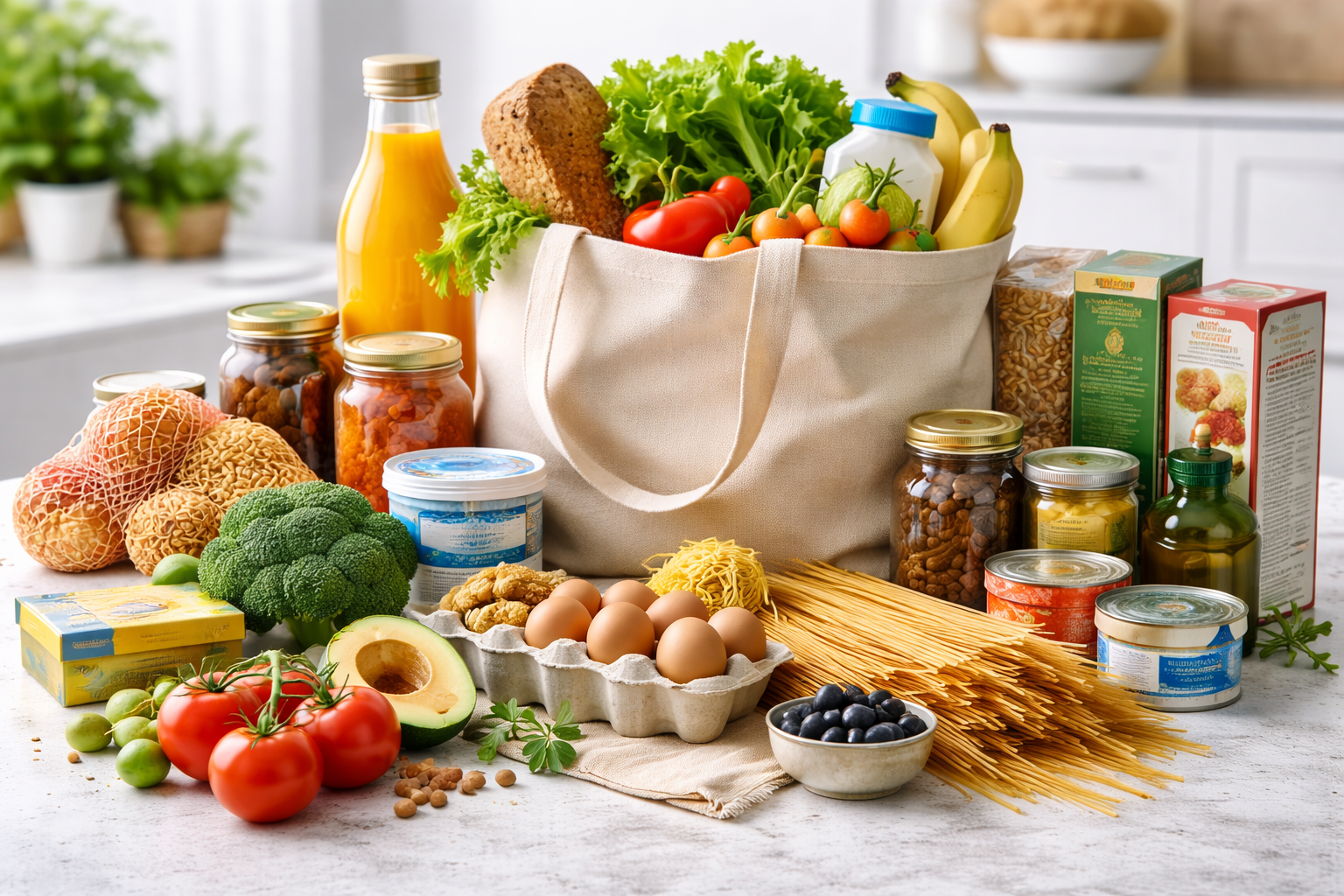
If you want a simple rule: Buy fresh for what you’ll eat in 3–4 days, and buy frozen for everything you want to keep longer.
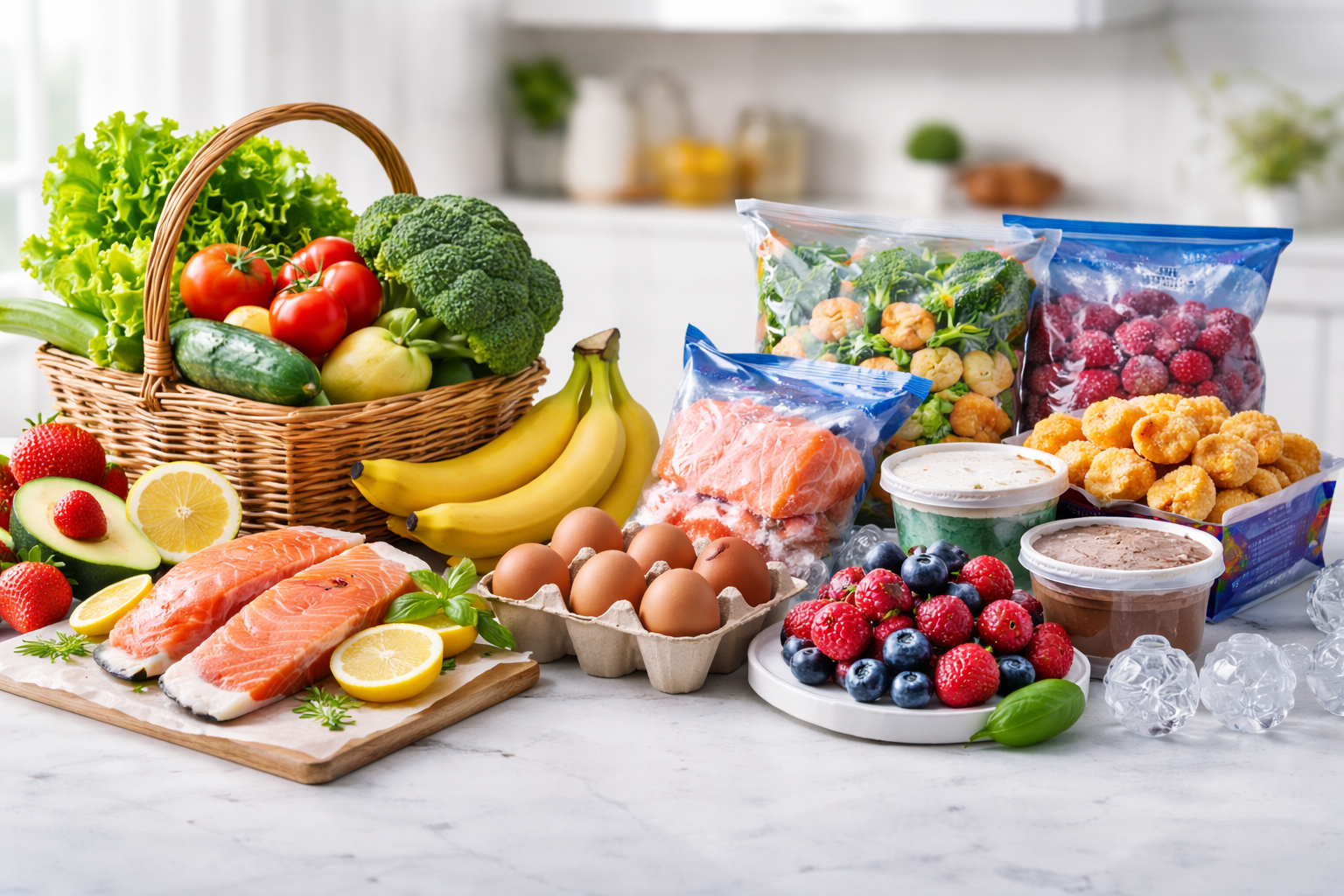
Fresh vs Frozen: Quick Decision Chart
Choose fresh when you want texture (salads, sandwiches, garnishes). Choose frozen when you want convenience, longer storage, and less food waste.
What to Buy Fresh (Best for Taste & Texture)
- Leafy greens & salad mixes (eat quickly)
- Fresh herbs (mint, coriander, parsley)
- Tomatoes, cucumbers, lemons (daily use)
- Fresh fruits for snacks (bananas, apples, berries)
- Fresh bread items if you consume fast
- Fresh fish/meat for 1–2 planned meals
Internal links: Link keywords like “Fresh Fruits” and “Fresh Vegetables & Herbs” to your category pages.
What to Buy Frozen (Best for Value & Zero Waste)
- Frozen vegetables (quick sides, soups, curries)
- Frozen fruits (smoothies, bowls, desserts)
- Frozen chicken nuggets / patties (busy-night meals)
- Frozen fish fillets (easy protein anytime)
- Ice cream / frozen desserts (treats + guests)
- Frozen ready items for quick lunches
Internal links: Link “Frozen Fruits & Vegetables” and “Frozen Meat & Poultry” to those categories.
FAQs
Is frozen food healthy?
Yes. Frozen fruits and vegetables are great for smoothies, cooking, and quick meals—especially when you want longer storage and less waste.
What foods should I always buy fresh?
Leafy greens, herbs, salad items, and fruits you snack on daily are usually best fresh.
How do I save money using frozen items?
Frozen items reduce spoilage. You buy once and use over time, so you throw away less.